Do New TikTok Accounts Need Independent Proxies for Warm-Up?
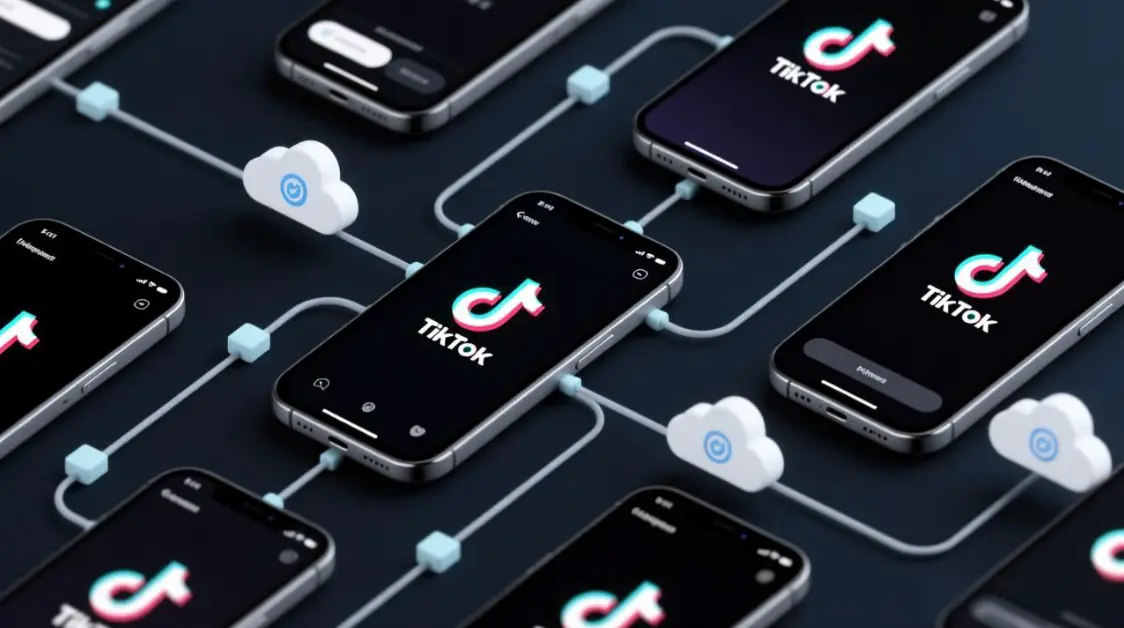
For anyone opening new TikTok accounts in 2025, one question comes up again and again:
“Do I really need independent proxies to warm up these accounts, or can I just use my normal connection?”
The honest answer is more nuanced than a simple yes or no. Whether you need proxies at all depends on how many accounts you run, where your operators are located, and what kind of risk your business can tolerate. Warm-up is ultimately about building a stable, human-looking usage pattern, not about “tricking” the platform with clever routing.
This article breaks the topic into three practical scenarios:
- Single-account warm-up on a normal device
- Multi-account warm-up where isolation actually matters
- Cross-region warm-up where geography becomes part of the strategy
Along the way, we’ll connect these scenarios to realistic proxy choices, while staying inside compliant, business-safe use cases like regional content testing, ad verification, and brand monitoring.
1. What TikTok actually sees during account warm-up
Before deciding whether you need independent proxies, it helps to think from the platform’s perspective. A new TikTok account is evaluated through a combination of:
- Network signals – IP ranges, ASN, approximate region, and IP reputation
- Device and environment signals – OS, app version, device model, browser profile, time zone
- Behavioral patterns – how you scroll, watch, like, follow, and eventually post
During warm-up, the system is quietly answering questions like:
- “Does this look like a normal user from this region?”
- “Does this look like a script or a farm pushing multiple accounts from one fingerprint?”
Modern bot and abuse-detection engines combine IP reputation, device fingerprints, and behavior over time rather than relying on a single signal. Major providers such as Cloudflare and AWS describe exactly this kind of multi-signal model in their products: for example, Cloudflare Bot Management uses a mix of machine learning, fingerprinting, and behavioral analysis to score requests, while AWS WAF bot controls combine IP reputation lists with rate-based rules and other logic.
From this angle, independent network routes are useful only if they support a more realistic identity model. If proxies are noisy, shared, or unstable, they can hurt more than help.
2. Single-account warm-up: when a proxy is optional, not essential
If you are only bringing one new account online, an independent proxy is usually optional. In many cases, the safest path is:
- Use a real mobile network instead of crowded public Wi-Fi
- Keep the device, IP range, and time zone consistent
- Spend the first 1–2 days just browsing, liking, following, and saving content in your niche
- Avoid rapid region hopping or logging in from multiple devices in a short window
In this scenario, adding a proxy doesn’t automatically improve trust. A poorly chosen IP range can even look worse than your real connection. If you do bring in a proxy, a narrow range of static residential proxies can behave more like normal household lines than generic data center ranges, but they are not a magic requirement.
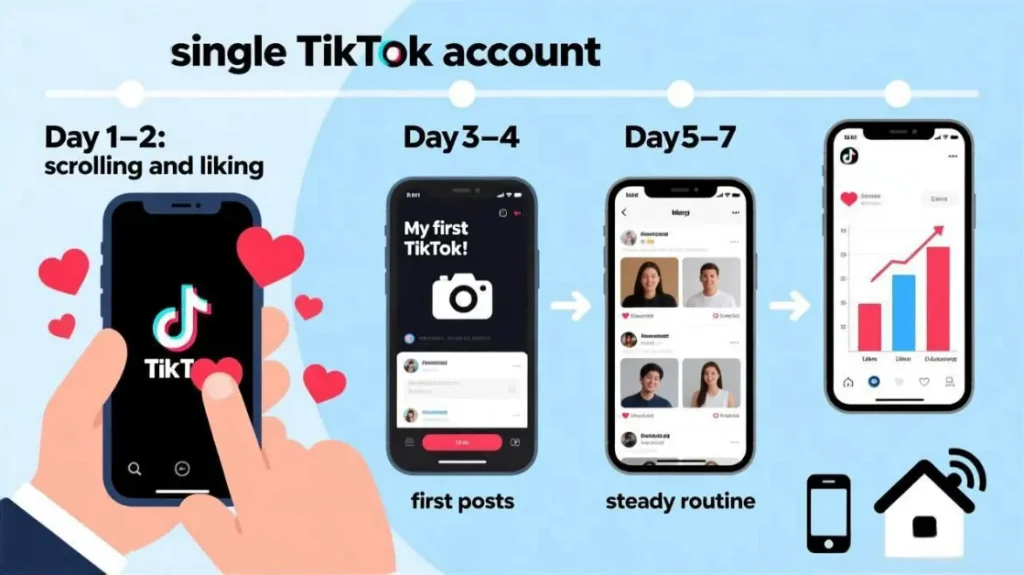
Quick single-account warm-up recipe (Days 1–7)
If you only care about one or two accounts, a minimal, low-risk recipe looks like this:
- Days 1–2
- Log in from the same device and network each time
- Scroll your For You page for 15–30 minutes per session
- Like a handful of videos that genuinely match your niche
- Follow 5–10 relevant creators, no mass following sprees
- Days 3–4
- Continue browsing and interacting as above
- Start posting 1 short video per day with clear hooks and simple edits
- Reply to early comments directly in the app, from the same device
- Days 5–7
- Keep the same schedule, at most 1–2 posts a day
- Avoid sudden changes in region, device, or network
If you follow this pattern on a stable connection, most single-account setups do not need independent proxies at all.
3. Multi-account warm-up: when isolation becomes non-negotiable
The picture changes completely when you are warming up multiple accounts in parallel—creators working with several brands, agencies handling many client profiles, or internal teams testing content variants for different regions.
Here, the risk is no longer “Will this one account look natural?” but:
“Will these accounts be quietly grouped together because of shared fingerprints and IP history?”
In that context, independent proxies can be justified, but they need to be used with discipline:
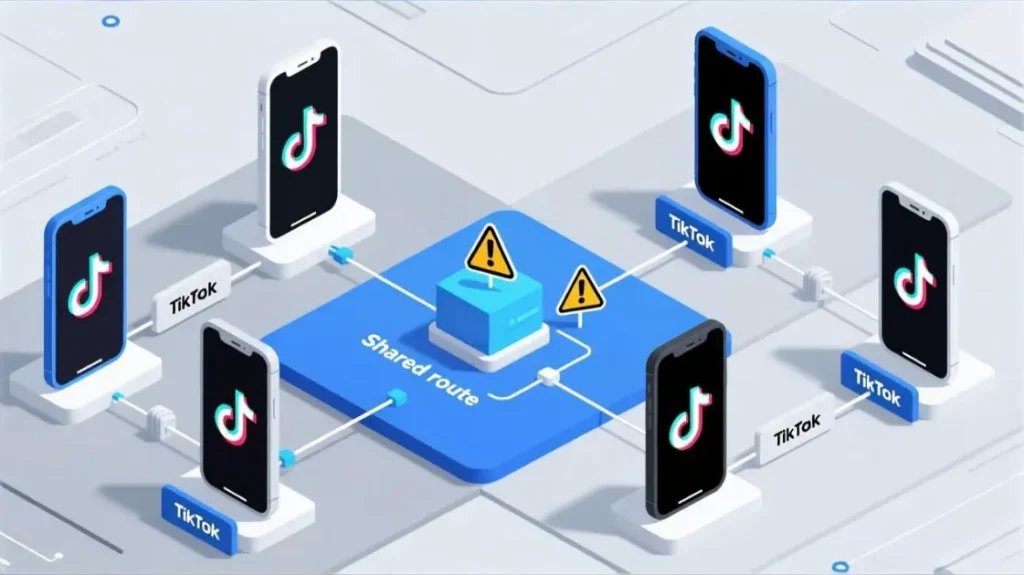
- One account = one environment
- Separate device or virtual profile
- Separate network route (IP range, ASN, region)
- No high-frequency IP rotation during warm-up
- Keep the route steady for days or weeks
- Avoid “every refresh = new IP” behavior in the early phase
- Human-paced sessions
- Normal session length and natural scroll / watch times
- Organic mix of viewing, liking, and following before heavy posting
A common pattern is to allocate a small pool of static datacenter proxies for low-risk monitoring tasks (analytics dashboards, competitor checks) and reserve cleaner, more stable residential routes for accounts that actually log in and post.
What goes wrong if you ignore isolation?
Typical failure patterns look like this:
- Several accounts log in from the same device and IP within hours
- They all show similar activity spikes and follow similar profiles
- One account triggers extra verification; shortly after, others see reduced reach
Once that kind of cluster forms in the logs, it is difficult to “untangle” the accounts again just by changing IPs later.
4. Cross-region warm-up: aligning geography with behavior
Another situation where independent proxies can make sense is cross-region warm-up.
Example:
- Your team is operating in Southeast Asia, but a brand wants its primary audience to be in the US or EU
- Devices, SIMs, and physical networks are not in the target country
If all usage comes from a distant region, you may see misaligned recommendations, or the account may be treated as “out-of-place” for the audience you want.
In this case, a region-aligned proxy strategy can help, but only if you also align behavior:
- Use stable, region-specific residential routes that match your target market
- Spend the first days engaging with local content: following relevant creators, reacting to regional trends, watching local-language clips
- Only start publishing once the account’s interaction history clearly reflects that region
For heavier teams, a mix of rotating residential proxies for data-heavy tasks (trend discovery, hashtag and sound scanning, public feed analysis) and stable static routes for actual logins can strike a balance between flexibility and account safety.

A common cross-region failure pattern
A frequent failure mode looks like this:
- New accounts are created on an overseas IP
- Operators alternately connect through a VPN, local Wi-Fi, and mobile data
- Content is in one language, but location and interaction history keep jumping
The result is often poor distribution rather than an immediate ban. The algorithm simply never builds a clear profile of who this account is for.
5. How protocol and proxy type affect stability
When you decide that independent proxies are justified, two technical choices affect day-to-day stability.
5.1 Protocol type
Different protocols suit different tools and workflows:
- HTTP proxies are enough for most browser-based tasks, dashboard views, and web tooling
- SOCKS5 proxies are often preferred for app-like traffic, multi-protocol tools, or teams that need more control over how connections are tunneled
If your TikTok workflows involve both in-app usage and web dashboards, it is common to separate them: HTTP for browser tools, SOCKS5 for app-facing traffic through compatible tooling.
5.2 Rotation policy
Rotation strategy should match the task:
- Static routes are ideal during warm-up and for long-lived accounts—you want a predictable, low-noise story
- Heavier rotation makes more sense for non-login workloads such as price monitoring, ad verification, or large-scale data crawls
For TikTok warm-up specifically, it is usually safer to start with static, low-rotation routes, then introduce more rotation only where it does not touch logged-in identity.
6. Practical, compliant use cases where clean routing helps
Even if you keep your warm-up conservative, there are plenty of legitimate reasons to standardise your proxy routing:
- Ad and creative verification
- Checking how ads render in different regions
- Verifying that landing pages, app store links, and creatives behave correctly
- Price monitoring and offer consistency
- Ensuring that catalog prices, shipping options, and discounts match what local users see
- Multi-region SEO and brand presence checks
- Confirming how profiles, hashtags, and linked sites appear in different markets
- Risk monitoring and early-warning
- Spotting sudden content takedowns, access issues, or geo-specific restrictions
For these types of work, long-term unlimited rotating residential segments can support large numbers of non-login requests while keeping your main warm-up accounts on their own static, identity-safe routes.
7. Putting it all together: a simple decision frame
Instead of treating “independent proxies” as a magic bullet, use a short checklist:
- How many accounts am I warming up?
- One account → your real, stable network is often enough
- Many accounts → isolation by environment and route becomes important
- Am I crossing regions or only working locally?
- Same region as operators → keep things simple and consistent
- Different region → consider region-aligned static routes and local engagement patterns
- What business tasks rely on this routing?
- For identity-critical work (logins, posting, messaging), prioritise stability and isolation
- For data and QA workloads (monitoring, verification, research), use wider rotating pools that never touch the core account sessions
If you eventually onboard a routing provider that focuses on compliant network paths and identity isolation—such as a vendor like MaskProxy—treat that routing layer as boring infrastructure: something that quietly keeps your accounts separate, regional, and predictable, while you focus on the hard part: making content that people actually want to watch.
FAQ: TikTok warm-up and proxies
Q1. Do I need proxies if I only warm up one TikTok account?
In most cases, no. A single account on a stable, real mobile or home connection is usually safer than forcing it through aggressive proxy setups. Focus on consistent devices and natural usage first.
Q2. How many accounts can safely share one proxy?
For warm-up and login activity, the conservative answer is one account per environment and route. Sharing one IP across several new accounts increases the chance of cross-account signals.
Q3. Is a VPN enough to protect multi-account setups?
A consumer VPN often mixes your traffic with many unrelated users and devices. This can introduce noisy or suspicious IP history. For structured multi-account work, dedicated and well-segmented routes are usually safer than generic VPNs.
Q4. Do I need high-frequency IP rotation to stay safe?
Not during warm-up. High-frequency rotation might be useful for scraping or large-scale data collection, but it makes login behavior look chaotic. New accounts usually benefit more from stable, low-rotation routes.
Q5. What matters more: proxies or content quality?
Proxies help with identity separation and regional alignment, but they cannot fix weak hooks, low retention, or irrelevant content. Once your routing is stable and sensible, most of your growth will still come from what you publish and how people react to it.