Reddit Proxies Field Guide for Teams and Scrapers

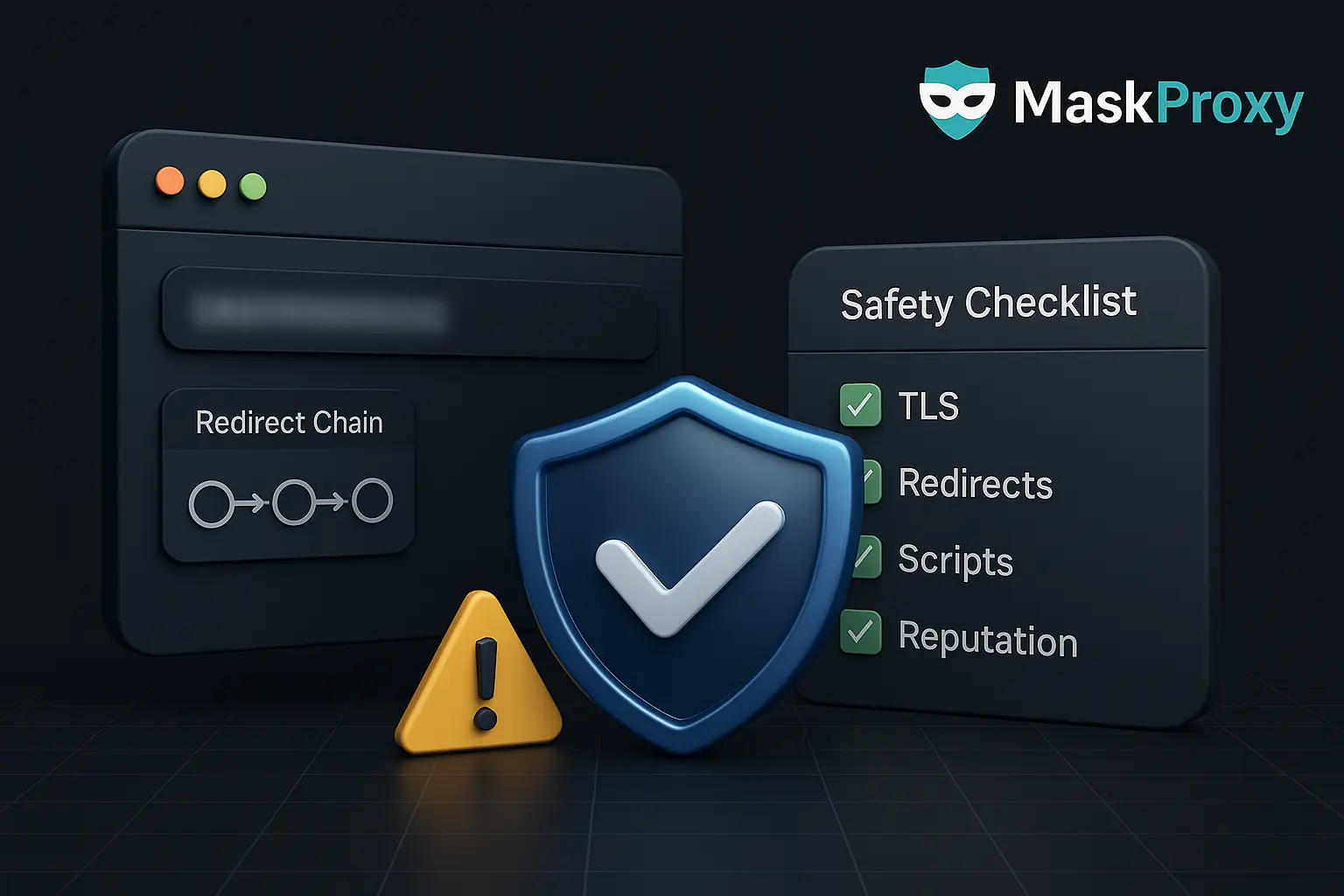
Reddit is unusually sensitive to inconsistent identity signals: sudden IP changes mid-session, mixed workflows sharing the same egress, and noisy request patterns can all create friction quickly. The goal with Reddit proxies is not “to hide,” but to route traffic in a way that keeps sessions stable, separates workflows, and makes large-scale collection predictable.
This guide is written for teams running growth, research, monitoring, and data pipelines, plus the implementers who have to keep it working day after day. It focuses on practical choices, clean setup, and a scraping architecture that fails safely when limits appear.
MaskProxy fits this style of operation when you want simple pool separation and predictable rotation controls without overcomplicating the proxy layer.
TL;DR
- Pick proxy types by workflow, not by “rotate more.” Logged-in work needs stable identity routing; public reads can rotate carefully.
- Separate traffic into pools: login actions, public reads, and quarantine/testing. Never mix them.
- Reliable scraping comes from pacing, backoff, and observability. Treat 429/403 as signals to slow down and isolate, not to brute-force.
- Proxies reduce friction, but bans and blocks can still happen if behavior patterns are risky.
What “Reddit proxies” means in real workflows
A proxy changes the egress IP and network characteristics Reddit sees. For teams, that usually supports three practical goals: stable access, clean workflow separation, and controlled data collection.
If you’re here for a specific outcome, jump to the section that matches your job:
- You need to choose a proxy type for your Reddit workflow, and justify risk/cost tradeoffs.
- You need to set up a proxy in a browser or OS, and keep identity stable.
- You need to scrape Reddit at scale, and keep failure rates predictable with pacing and health scoring.
When you’re browsing casually on one account, you may not need any proxy at all. When you’re running multiple identities, monitoring keywords, or collecting public content at scale, routing design becomes part of your reliability work.
A proxy won’t fix noisy behavior patterns. Fast bursts, repetitive endpoints, identical request shapes, or unstable session identity can trigger friction even on high-quality IPs. Treat proxies as routing infrastructure, not a cloak.
Choose the right proxy type for your Reddit task
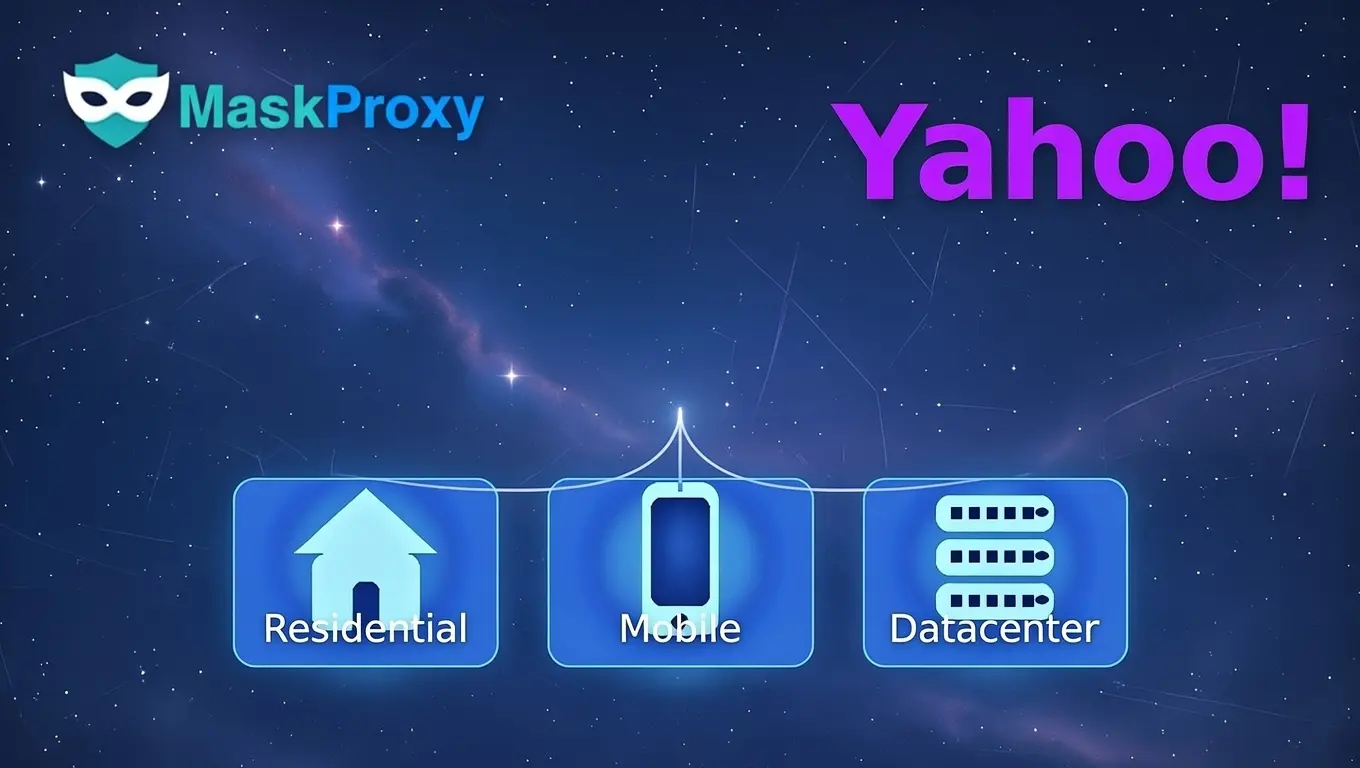
Datacenter, residential, and mobile proxies all work in different lanes. The “right” choice depends on whether you need stable sessions, how sensitive the workflow is, and how much volume you plan to push.
Datacenter proxies are cost-efficient for gentle public reads and testing, but they can hit friction faster when traffic patterns look automated. Residential proxies typically provide smoother access for mixed workloads and are the default for most teams doing monitoring plus some automation.
If you’re building a general-purpose baseline for team workflows, start with Residential Proxies and then carve out datacenter or mobile lanes only where you can justify them. Keep the decision criteria task-first, not provider-first.
Rotation modes that actually matter
- Static IP (dedicated): best when you need long-lived login stability and consistent identity signals.
- Sticky session: same IP for a defined session window, then rotate between sessions.
- Per-request rotation: only for low-risk public reads where session continuity is irrelevant.
If you log in, stability beats randomness. Rotating mid-session often creates identity drift: the cookie jar says “same user,” the IP says “new user,” and you get verification loops.
SOCKS5 vs HTTP at a practical level
- HTTP(S) proxies are easiest for scraping stacks and common clients.
- SOCKS5 is useful for tools that route at the socket layer or require flexible protocol handling.
Pick the protocol based on your tooling, then enforce routing rules above it. Many reliability problems blamed on “proxy type” are really session or pool design issues.
Decision matrix
| Task | Recommended type | Rotation style | Risk | Cost | Notes |
|---|---|---|---|---|---|
| Normal browsing (no automation) | Residential | Sticky 30–120 min | Low | Medium | Keep identity stable |
| Brand monitoring (light cadence) | Datacenter or residential | Rotate 5–15 min | Low–Med | Low–Med | Start low concurrency |
| Multi-account operations | Residential or mobile | Sticky per account | High | Med–High | One profile → one route |
| Moderation research | Residential or mobile | Sticky 30–180 min | Med–High | Med–High | Separate from scraping pool |
| Geo-consistent access | Residential | Sticky | Med | Medium | Avoid geo “teleporting” |
| Scraping public content | Residential (preferred) | Rotate with health scoring | Med–High | Medium | Backoff + quarantine |
Routing blueprint for teams
Most teams fail on Reddit not because they chose the wrong proxy type, but because they didn’t define identity boundaries.
Identity separation rules
- One account must map to one browser profile and one route.
- Never share cookies or local storage across identities.
- Don’t mix logged-in actions with scraping traffic, even if “it’s the same subreddit.”
- Keep geo, timezone, and language signals consistent within a session.
This is where pool design pays for itself.

Pool design you can operate
Create three pools:
- Login pool
Used for login, browsing while authenticated, and any actions tied to account state. - Public-read pool
Used for public endpoints and monitoring. This pool can rotate, but it still needs pacing. - Quarantine pool
Used to test new ranges, new endpoints, and new request shapes without poisoning trusted lanes.
A practical pattern is to run the public-read pool with short sticky windows and rotate based on health rather than a timer. If your provider supports session pinning and controlled rotation, Rotating Residential Proxies can fit this design without forcing mid-session identity drift.
Session length and rotation rules
- Logged-in workflows: sticky 60–180 minutes, rotate between sessions only.
- Public monitoring: sticky 5–15 minutes, rotate on health signals.
- Scraping: rotate on failure patterns (timeouts/429/403), not on every request.
Pool naming and config template
A small naming standard prevents accidental pool mixing:
rdt-login-us-01rdt-public-us-01rdt-public-us-02rdt-quarantine-any-01rdt-geo-jp-01(only if you truly need geo lanes)
A minimal config shape many teams use:
- pool name
- endpoints list
- session mode (static/sticky/rotate)
- max concurrency per worker
- backoff policy
- quarantine threshold
Minimal monitoring signals
Track per pool and per endpoint:
- success rate (2xx/3xx)
- 429 rate-limit frequency
- 403 / interstitial frequency
- latency (median + p95)
- login verification loops

Setup guide for browser, OS, and tools
Browser setup
Use a dedicated browser profile per identity. Assign exactly one route to that profile. Disable “rotate every request” behaviors for logged-in profiles.
Verification steps:
- confirm egress IP and region once per session
- confirm timezone and language settings are consistent
- keep cookies isolated per profile
OS-level setup
System proxies are useful when multiple apps must share one route. Configure proxy host/port and authentication, then verify egress IP and DNS behavior before running a workload.
Tooling note on SOCKS5
Some anti-detect browsers and network clients prefer SOCKS5 for consistent routing. If your toolchain uses SOCKS5, keep the route stable and avoid bouncing between different endpoints mid-session. SOCKS5 Proxies fit well for app-level routing where you want the same identity across multiple requests without relying on browser extensions.
MaskProxy credentials are easy to plug into either browser extensions or OS-level routing, which reduces configuration mistakes when teams hand off workflows.
Minimal code snippet for proxy setup
import requests

proxies = {
    "http":  "http://USER:PASS@HOST:PORT",
    "https": "http://USER:PASS@HOST:PORT",
}

resp = requests.get(
    "https://www.reddit.com/",
    proxies=proxies,
    timeout=(5, 20),
    headers={"User-Agent": "research-client/1.0"},
)
print(resp.status_code)
A practical rule: keep the proxy stable for the life of a login session, and only rotate between sessions, not during them.
Scrape Reddit reliably at scale without getting blocked
Reliable scraping is mostly pacing, observability, and safe failure handling. Proxies matter, but they are not the main character.

Start by validating whether your use case can be satisfied via official options and documented interfaces, then design your traffic so you minimize load.
Helpful references:
- Reddit Developer Documentation: https://developers.reddit.com/
- Reddit API documentation: https://www.reddit.com/dev/api/
- Reddit User Agreement: https://www.redditinc.com/policies/user-agreement
- Reddit Content Policy: https://www.redditinc.com/policies/content-policy
- HTTP semantics (RFC 9110): https://www.rfc-editor.org/rfc/rfc9110
Minimal scrape architecture
Keep it simple and observable:
- Job queue (targets + cursor state)
- Worker pool (bounded concurrency)
- Fetcher wrapper (timeouts, retries, backoff)
- Parser/normalizer (schema mapping)
- Storage (raw + cleaned)
- Metrics + logs (per endpoint, per proxy, per worker)
A clean separation is to route scraping via a dedicated lane and never reuse those IPs for logged-in profiles. If your organization already maintains a platform-specific lane, Reddit Proxies can represent that boundary in your routing map without leaking traffic across workflows.
Concurrency, retries, and backoff that won’t melt your pool
Use a budgeted approach:
- Start with low concurrency and ramp gradually.
- Use exponential backoff with jitter on 429 and timeouts.
- Don’t retry 403 in a loop. Treat it as a reputation or pattern signal.
- Add per-endpoint pacing. Some endpoints tolerate less burst than others.
A simple throttle guide that avoids common failure modes:
| If you see this | Do this immediately | Then stabilize by doing this |
|---|---|---|
| 429 rising | cut concurrency 30–60% | add jittered backoff, add cooldown windows |
| 403 rising | quarantine offenders | reduce retries, rotate via health score not timer |
| timeouts rising | cap per-worker concurrency | downgrade slow endpoints, extend timeouts slightly |
Retry tiers that work in practice:
- timeouts / transient 5xx: retry 1–2 times with backoff
- 429: global slow-down + per-worker cooldown
- 403 / interstitial: quarantine the endpoint and reduce concurrency
Proxy health scoring and quarantine
A simple rolling score helps:
- +1 for clean success
- -2 for timeout
- -3 for 429
- -5 for 403 / interstitial
Quarantine endpoints below a threshold and cool them down. This prevents a small set of degraded routes from cascading into a full-run failure.
Minimal logging fields that make debugging fast
Log these fields per request:
- endpoint name and URL pattern (not full PII URLs if applicable)
- status code
- latency
- proxy endpoint ID and pool name
- retry count and backoff time
- worker ID and concurrency at the moment
When friction spikes, those fields tell you whether it’s a pool issue, an endpoint pacing issue, or a bad batch of routes.
What to do when blocked
When friction spikes:
- Stop ramping concurrency and reduce request rate.
- Identify whether it’s pool-specific or endpoint-specific.
- Quarantine the worst offenders by score.
- Increase stickiness for logged-in lanes to reduce identity drift.
- Reduce pattern noise by spreading requests across time and targets.
- Re-validate geo and session consistency for affected identities.
Troubleshooting playbook
| Symptom | Likely cause | What to check | Fix |
|---|---|---|---|
| Captcha / interstitial spikes | reputation + noisy patterns | pool 403 trend, recent ramp changes | slow down, quarantine offenders, keep sessions stable |
| 429 rate limits | concurrency too high | per-endpoint throughput, retry storms | lower concurrency, add jittered backoff, cap per-endpoint rate |
| 403 responses rising | endpoint reputation / pattern triggers | which pool, which endpoint pattern | quarantine, cool down, reduce retries, spread load |
| Login loops / repeated verification | IP changes mid-session, profile drift | session pinning, profile reuse | sticky sessions, one profile per account, avoid mid-session rotation |
| Works in browser, fails in code | headers or cookie handling mismatch | UA consistency, cookie jar behavior | align headers, keep consistent session handling |
| Latency spikes | overloaded or degraded routes | p95 latency by endpoint | down-rank health score, fail over, reduce concurrency |
If you’re unsure whether a failure is protocol-specific or behavior-specific, review your routing primitives first. Proxy Protocols is a useful reference point for aligning what the client is doing with what the proxy layer actually supports.
Compliance, ethics, and risk disclosure
Use proxies for legitimate needs: research, monitoring, and stable access. Avoid high-impact behaviors that overload systems or violate rules.
What not to do:
- Don’t hammer endpoints with bursts or retry storms.
- Don’t automate posting/commenting at spam cadence.
- Don’t bypass rules or attempt to evade enforcement.
- Don’t collect more personal data than you need.
Data handling:
- minimize collection and retention
- secure access controls
- document the purpose and scope of data processing
Proxies reduce friction and isolate workflows, but they do not guarantee you will avoid bans or blocks. Operational safety comes from conservative pacing and clean identity separation.
Checklists for pre-launch and daily ops
Pre-launch checklist
- define workflows: login, public monitoring, scraping
- assign pools and keep them separated
- set session rules and rotation rules per lane
- implement backoff tiers for 429 and timeouts
- implement quarantine rules for 403/interstitials
- log status codes, latency, proxy endpoint ID, retry count
Daily ops checklist
- review pool metrics: 403/429 frequency and latency tail
- rotate out degraded ranges and cool down quarantined routes
- audit identity separation (profiles and cookie jars)
- validate geo and language stability for logged-in lanes
- adjust throttles based on friction trend
For cost-sensitive public monitoring, a small datacenter lane can be useful, but keep it strictly separated from your login pool. Static Datacenter Proxies can work well for gentle reads when you’re not tying requests to account state.

Daniel Harris is a Content Manager and Full-Stack SEO Specialist with 7+ years of hands-on experience across content strategy and technical SEO. He writes about proxy usage in everyday workflows, including SEO checks, ad previews, pricing scans, and multi-account work. He’s drawn to systems that stay consistent over time and writing that stays calm, concrete, and readable. Outside work, Daniel is usually exploring new tools, outlining future pieces, or getting lost in a long book.
FAQ
1. What proxy type fits Reddit browsing versus scraping?
Residential is the default for mixed workflows; datacenter can work for gentle public reads; mobile is for higher-friction operations.
2. Should I rotate IPs on every request when scraping?
Not by default. Rotate based on health signals and keep pacing conservative.
3. Why do I still get 429 with a large proxy pool?
Concurrency and endpoint pacing still matter. Backoff and slow down globally.
4. What causes login verification loops?
Mid-session IP changes, profile drift, and inconsistent identity signals.
5. Is SOCKS5 required for Reddit?
HTTP(S) is enough for most stacks; SOCKS5 is useful when your tools route at the socket layer.
6. What’s the minimum monitoring to keep scrapes reliable?
403/429 rates, success rate, latency tail, and a quarantine list per endpoint.
7. Can one proxy be shared across multiple Reddit accounts?
Avoid it. One identity should map to one stable route.
8. What should I do when captchas spike suddenly?
Slow down, quarantine offenders, stop mixing pools, and stabilize session routing.